Motorcycle Tyres How to Check Wear Pressure and When to Replace Them
Your tyres are the only part of your motorcycle that touches the road. Two small patches of rubber, each about the size of your hand, carry the whole weight of the bike, grip the road when you brake and corner, and channel water away in the rain. Everything else on the bike depends on them doing their job.
Tyre checks are quick, simple, and one of the most important habits a new owner can build. This guide covers how to check pressure, how to read wear, what damage to look for, and when a tyre needs replacing.
Why Tyre Pressure Matters
Tyre pressure affects almost everything about how your bike handles. Under-inflated tyres make steering feel heavy and vague, increase fuel consumption, and wear out faster on the edges. Over-inflated tyres reduce grip, make the ride harsh, and wear out faster in the centre of the tread. Both are bad, and both are easy to avoid.
The correct pressures for your bike are in your owners manual and usually on a sticker on the swingarm or under the seat. These figures are specific to your bike and your tyres, so use them rather than a general number you found online. Note that the recommended pressure often changes when you carry a passenger or luggage, so check the manual for loaded figures too.
Check your pressures at least once a week, and always before a long ride. Tyres lose a small amount of air naturally over time, and a slow puncture can drop the pressure without you noticing. Check them when the tyres are cold, before you ride, because pressure rises as the tyre warms up and a warm reading will be misleading.
How to Check Your Tyre Pressure
You need a reliable pressure gauge. A small digital gauge is cheap, accurate, and easy to carry. Petrol station gauges are often inaccurate, so if you use one, check it against your own gauge from time to time. Keep a gauge in your toolkit or under your seat so it is always with you.
Remove the valve cap, press the gauge firmly onto the valve, and read the pressure. If it is low, add air until it matches the recommended figure. If it is high, press the small pin in the centre of the valve to release a little air, then check again. Replace the valve cap when you are done, because it keeps dirt and water out of the valve.
How to Check Tread Depth and Wear
Tread depth is what lets your tyres grip in the wet. As tread wears down, the tyre cannot clear water as well, and the risk of aquaplaning rises. The legal minimum tread depth varies by market, but as a practical rule, replace a tyre well before it reaches the legal limit. A tyre with shallow tread is a tyre with reduced grip in the rain.
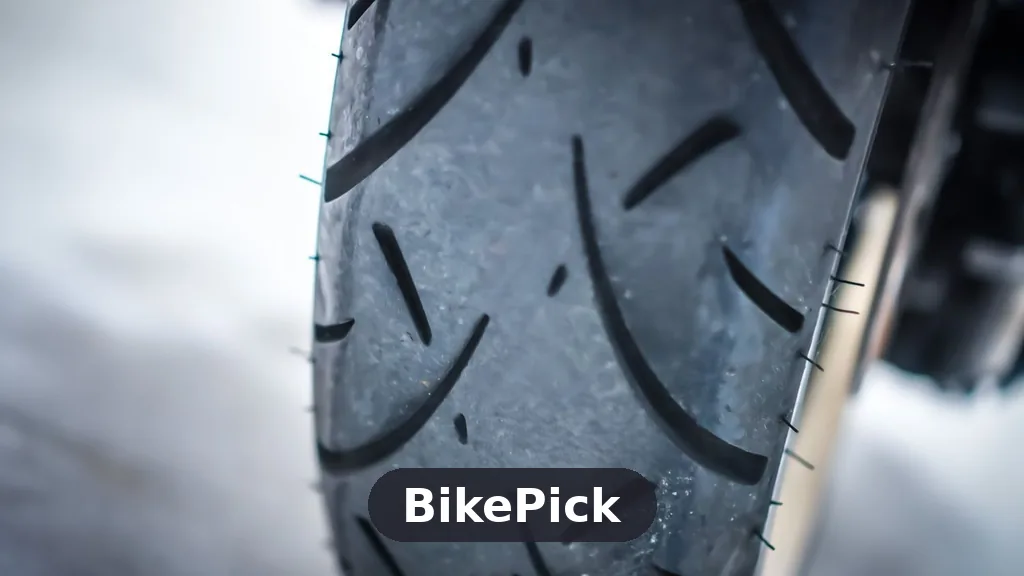
Most motorcycle tyres have tread wear indicators built in. These are small raised bars in the tread grooves. When the tread surface wears down to the level of these bars, the tyre is at the end of its useful life and needs replacing. You can also use a tread depth gauge, which gives you a precise reading.
Look at the wear pattern, not just the depth. A tyre that is worn more on one side than the other may indicate a wheel alignment problem or a suspension issue. A tyre worn flat in the centre usually means it has been over-inflated, or that the bike has spent most of its time going straight. A tyre worn on the edges but not the centre is often under-inflated. Uneven wear is worth investigating, because it can point to a problem that will wear out your next tyre too.
What Damage to Look For
Every time you check your tyres, look for damage. Cuts, cracks, bulges, and embedded objects are all reasons to take the tyre seriously. A nail or screw stuck in the tread may not cause an immediate puncture, but it can work its way deeper and cause a sudden loss of pressure.
Cracks in the sidewall are a sign of age. Rubber hardens and cracks over time, even if the tyre has plenty of tread left. A tyre that is more than five years old deserves a close look, and one that is much older should be replaced regardless of tread depth. You can find the manufacturing date on the sidewall as a four digit code, the week and the year of manufacture.
A bulge in the sidewall means the structure inside the tyre is damaged, and the tyre could fail suddenly. Do not ride on a tyre with a bulge. Have it replaced before you ride again. The same applies to any tyre with a deep cut that exposes the fabric or cords underneath.
When to Replace Your Tyres
Replace a tyre when the tread reaches the wear indicators, when the tyre is damaged, or when it is old enough that the rubber has hardened and cracked. Also replace tyres in pairs if the wear is uneven or if one tyre is much older than the other, because mismatched tyres can make the bike handle unpredictably.
Choose tyres that suit how you ride. A commuter who rides in all weathers needs a tyre with good wet grip and long life. A rider who enjoys weekend bends may prefer a sportier tyre with more grip, accepting a shorter life. Your owners manual lists the correct sizes, and a good tyre dealer can help you choose a model that fits your riding style and your budget.
New tyres need running in. The surface of a new tyre is smooth and can be slippery for the first hundred kilometres or so. Ride gently, avoid hard braking and deep lean angles, and build up your confidence gradually as the tyre scrubs in. Most tyre manufacturers give guidance on this, so ask your dealer or check the tyre maker’s advice.
Tyre Care Through the Seasons
Tyres are affected by temperature. In cold weather, pressures drop, so check them more often in winter. In hot weather, pressures rise as the tyre warms up, but you should still check them cold and set them to the recommended figure. Never let air out of a hot tyre to bring it down to the cold figure, because it will be under-inflated when it cools.
If you store your bike for a long period, keep the tyres off cold concrete if you can, and avoid letting the bike sit in one position for months, as this can cause flat spots. A paddock stand that lifts the wheels off the ground is ideal. For more on storage, read our guide to how to store your motorcycle for winter.
Your Tyre Check Checklist
Check pressures weekly and before any long ride, always when the tyres are cold. Use your own gauge and the pressures in your owners manual. Inspect the tread for wear, and replace the tyre when it reaches the wear indicators. Look for cuts, cracks, bulges, and embedded objects every time you check. Read the date code on the sidewall and replace old tyres even if the tread looks fine. Ride gently for the first hundred kilometres on new tyres. Keep a gauge and a small pump or repair kit with you on longer rides.
Tyre checks take five minutes and they are one of the best investments of time in motorcycling. A tyre in good condition grips, steers, and stops the way your bike was designed to. A neglected tyre does none of those things well. Build the habit now, and it will protect you on every ride. For the rest of your regular upkeep, read our guide to new owner maintenance basics and our guide to motorcycle chain maintenance.
Two small patches of rubber stand between you and the road. Look after them, and they will look after you.
How often should I check my motorcycle tyre pressure?
Check your tyre pressure at least once a week and before any long ride. Always check when the tyres are cold, before you ride, because pressure rises as the tyre warms up. Use your own gauge and the figures in your owners manual.
What is the minimum tread depth for a motorcycle tyre?
The legal minimum tread depth varies by market, so check the rules where you ride. As a practical rule, replace a tyre well before it reaches the legal limit, because shallow tread gives much less grip in the rain. When the tread wears down to the built-in wear indicators, the tyre needs replacing.
How do I know if my motorcycle tyre is too old?
Check the four digit date code on the sidewall, which shows the week and year of manufacture. Rubber hardens and cracks with age, even if the tread looks fine. A tyre over five years old deserves a close inspection, and a much older tyre should be replaced regardless of tread depth.
Can I ride with a nail in my motorcycle tyre?
A nail or screw in the tread may not cause an immediate puncture, but it can work deeper and cause a sudden loss of pressure. Do not ignore it. Have the tyre inspected by a professional as soon as possible, and do not ride at speed until it has been checked.