Motorcycle Licence and Training Basics for New Riders
Before you buy a motorcycle, you need to understand how licensing and training work where you live. The details vary by country and region, so this guide stays general on purpose. It explains the stages most new riders go through, the skills a good course should teach, and the habits that keep you safe in your first year. Check your local licensing authority for the exact rules, categories and test requirements that apply to you.
Training is not just a hurdle before you can ride. It is the foundation of everything that follows. A rider who learns good clutch control, braking, observation and road positioning from the start will be safer and more confident than a rider who picks up habits by trial and error. The money and time you spend on training pay back every time you ride.
How licensing usually works
In most places, you cannot simply buy a motorcycle and ride it on public roads. You usually need a learner permit or provisional licence first, then you complete training, then you pass a theory test and a practical riding test. Some systems use staged licences, where new riders start on smaller motorcycles and move to larger ones after gaining experience and passing further tests.
The exact steps, age limits and engine limits differ widely, so do not rely on advice from a rider in another country. Visit the official licensing website for your area and write down the steps in order. Note what documents you need, what tests you must pass, whether training is compulsory, and how long each stage lasts. That official list is your plan.
Be careful about shortcuts. Riding without the correct licence can leave you uninsured and facing serious legal trouble if you are stopped or involved in a crash. It also means you miss the structured learning that makes riding safer. There is no shortcut worth that risk.
Choosing a good training course
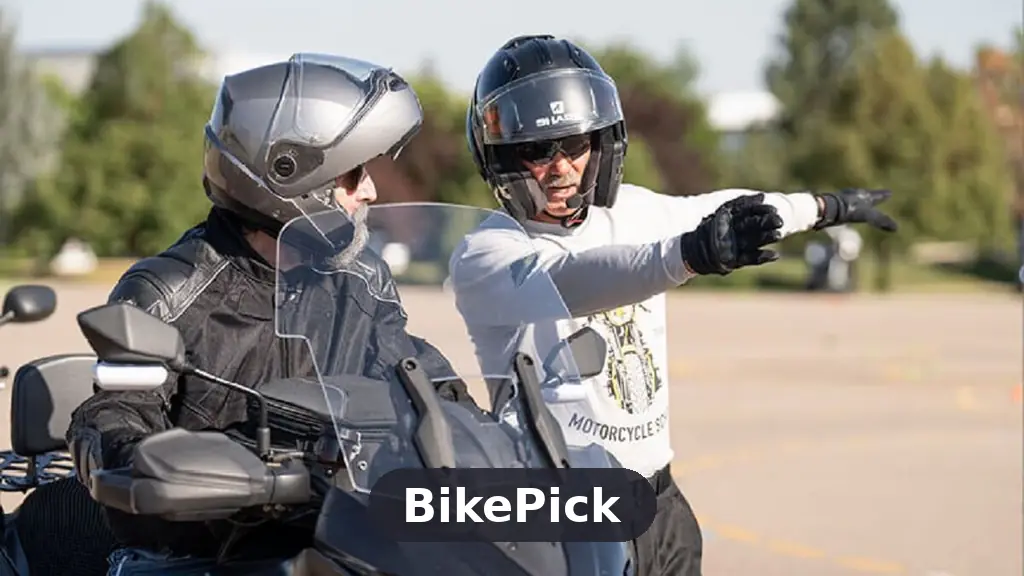
Not all training is equal. A good course teaches you to ride, not just to pass a test. Look for a school with qualified instructors, well maintained training bikes, a clear syllabus and small groups. Ask what the course covers, how much time you spend riding rather than sitting in a classroom, and what happens if you need extra practice before your test.
A basic course should cover starting and stopping smoothly, clutch and throttle control, slow speed balance, turning, emergency braking, observation and road positioning. A fuller course should add hazard awareness, riding in traffic, riding in different weather, and planning for junctions, roundabouts and motorway or highway riding where relevant.
Ask other riders in your area which schools they recommend, and read recent reviews. A school that rushes students to test, or that has a poor record of looking after its bikes, is a warning sign. A good instructor is patient, clear and honest about what you need to improve. If you feel rushed or confused after your first session, consider a different school before you invest more time and money.
What to learn before your test
Your theory learning matters as much as your riding. Learn the road rules, signs and markings for your area, and learn how they apply to a motorcycle. A motorcycle is smaller and less visible than a car, so you need to think differently about junctions, overtaking and following distances. Theory study helps you make good decisions before you are in a difficult situation.
On the bike, focus on the basics until they feel automatic. Smooth clutch control, looking where you want to go, braking with both brakes, and keeping a safe following distance are the core skills. Practice slow speed riding in a safe, empty space. It feels boring at first, but slow control is what saves you in car parks, traffic queues and tight turns.
Practice emergency stops in a safe place with an instructor, so you know how your bike feels under hard braking and how ABS responds if your training bike has it. Learn to check mirrors and blind spots before every move, and learn to position yourself in the lane so other drivers can see you. These habits are simple, and they prevent a large share of common crashes. Our guide to motorcycle safety basics explains visibility, braking and defensive riding in more detail.
Gear and bike preparation for training
Most schools provide a training bike and a helmet, but you should still arrive with proper gear. Wear a helmet that fits well, a jacket with protection, gloves, sturdy boots that cover your ankles and long trousers made for riding where possible. Even at training speeds, a fall can cause serious skin injuries, and good gear reduces that risk a great deal.
If you already own a bike, make sure it is roadworthy before you ride it to training. Check tyres, brakes, lights, chain and fluid levels, and make sure your insurance and documents are in order for the licence stage you hold. If you are unsure about any of these checks, ask the school or a mechanic before your first session. Our essential riding gear guide explains what to look for in a helmet, jacket, gloves and boots.
Bring water, sun protection where relevant and a clear head. Training days can be long and tiring, especially in hot weather. Tired riders make more mistakes, so take breaks when offered and tell your instructor if you feel exhausted. Learning is slower when you are tired, and safety comes first.
After you pass: your first year on the road
Passing your test is the start of learning, not the end. The first year is when most new riders face their highest risk, because they are riding without an instructor for the first time. Keep your early rides short, familiar and in good weather. Build up distance, traffic and complexity gradually, rather than taking on a long tour or a busy motorway in your first week.
Consider further training after you pass. Many schools offer advanced or refresher courses that cover cornering, hazard perception, group riding and riding in rain. These courses are often short and practical, and they can improve your riding far more than simply adding miles without guidance. A rider who keeps learning is a rider who keeps improving.
Choose your first bike with your training fresh in mind. A light, forgiving bike will let you practise what you learned without fighting the machine. Read our guide to best beginner motorcycles and our guide to how to pick your first or next motorcycle before you decide, and test ride with the skills from your course in mind.
A new rider training checklist
Use this checklist to make sure nothing important is missed before you start riding on your own.
One, check your local licensing steps on the official website and write them down. Two, book a reputable training school with qualified instructors and well kept bikes. Three, study theory and road rules for your area, not just riding skills. Four, practise slow speed control, emergency braking and observation until they feel natural. Five, wear proper gear for every ride, including training. Six, choose a first bike that is light, forgiving and easy to control. Seven, plan short, familiar rides for your first month and add complexity gradually. Eight, book further training within your first year to build on what you learned.
If you work through this list honestly, you will start riding with a solid foundation. That foundation is worth more than any accessory or upgrade you could buy for the bike.
Conclusion
Licence and training rules differ by place, but the principle is the same everywhere. Learn properly, practise the basics until they are automatic, wear good gear and build your experience gradually. A good course and a patient first year will give you skills that last for your whole riding life. Take training seriously, choose a school that teaches you to ride well rather than just to pass, and enjoy the road with confidence built on real skill.
Do I need training before I can ride a motorcycle
In most places you need a learner permit or licence and some form of training before you can ride on public roads. The exact rules vary by country and region, so check your local licensing authority. Even where training is not compulsory, a good course is the safest way to learn clutch control, braking and road awareness.
How long does it take to learn to ride a motorcycle
Most new riders need several days of training spread over a few weeks to reach test standard, plus regular practice. Some learn faster and some need more time, and that is normal. Do not rush to test before you feel confident with slow speed control, emergency braking and riding in traffic.
What should I wear for motorcycle training
Wear a well fitting helmet, a protective jacket, gloves, sturdy ankle covering boots and long riding trousers where possible. Even at low training speeds a fall can cause injury, so proper gear matters from the first session. Ask your school what they provide and what you need to bring.
What should I do after passing my motorcycle test
Keep your early rides short, familiar and in good weather, and build up distance and traffic gradually. Consider further training in your first year to improve cornering, hazard awareness and wet weather riding. Choose a light, forgiving first bike that lets you practise what you learned without fighting the machine.