Motorcycle Chain Maintenance How to Clean Lube and Adjust It
Your motorcycle chain does a tough job. It transfers all of the engine power to the rear wheel, it flexes thousands of times per ride, and it lives out in the open where road dirt, water, and grit attack it constantly. A neglected chain wears out fast, makes noise, saps power, and can even snap. A well maintained chain lasts far longer, runs quietly, and keeps your bike feeling smooth.
Chain maintenance is one of the simplest jobs a new owner can learn. It needs no special tools beyond a few basics, and it takes less than half an hour once you know the steps. This guide covers cleaning, lubrication, and adjustment, plus how to tell when a chain is worn out.
How Often Should You Maintain Your Chain
As a general rule, clean and lubricate your chain every 500 to 800 kilometres, or more often if you ride in rain, dust, or on dirty roads. Check the tension every time you lubricate it, and adjust it when it falls outside the range in your owners manual. These are general guidelines, so always check your manual for the exact figures for your bike.
Riding in the rain washes lubricant off the chain, so always re-lubricate after a wet ride.
What You Need
You do not need much equipment. A chain cleaner or a mild degreaser, a soft brush or an old toothbrush, a clean rag, and a good quality chain lubricant are the essentials. A rear paddock stand makes the job much easier because it lifts the rear wheel off the ground so you can spin it freely. If you do not have a stand, you can roll the bike forward a little at a time, but a stand is worth the investment if you plan to do your own maintenance.
Use a lubricant made for motorcycle chains, not general-purpose oil or spray lubricant. Motorcycle chain lube is designed to stick to the chain at speed and to penetrate between the links. It comes in spray cans or drip bottles. Either works well. Avoid using a pressure washer on your chain, as it can force water past the seals and into the links.
How to Clean Your Chain
Start with the bike on its stand and the engine off. Never clean a chain with the engine running and the wheel spinning. It is tempting to let the engine turn the wheel for you, but it is extremely dangerous, and fingers can be caught in the sprocket in an instant. Always turn the wheel by hand.
Spray the chain cleaner onto the chain while slowly turning the rear wheel by hand. Work your way around the whole chain, then use the brush to scrub each link. Pay attention to the sides of the links and the rollers, where grit collects. Wipe the chain with a clean rag to remove the dissolved dirt and old lubricant.
Repeat the process if the chain is very dirty. A chain that has not been cleaned in a long time may need two or three rounds before it looks clean. Let the chain dry fully before you lubricate it. If you are in a hurry, a short ride at low speed will help dry it, but it is better to let it air dry for a few minutes.
How to Lubricate Your Chain
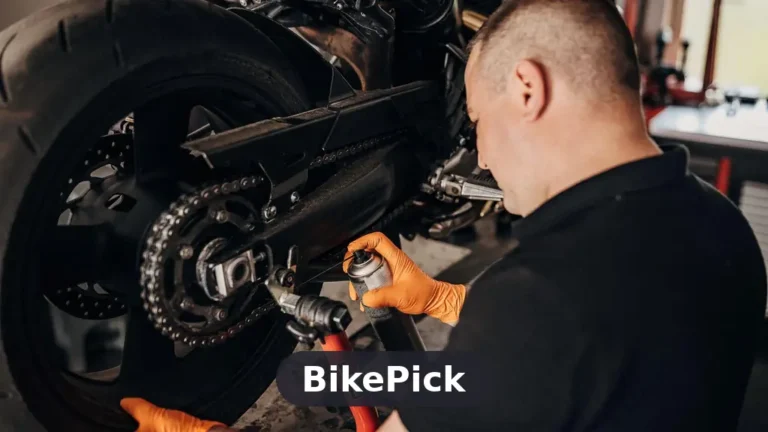
Lubricate the chain after cleaning, while it is still warm from a short ride if possible. Warmth helps the lubricant flow into the links. Hold the spray can or bottle close to the chain and apply a steady, thin line to the inside of the chain, the side that contacts the sprockets, as you slowly turn the rear wheel by hand.
Apply the lubricant to the inner side of the chain, not the outside. The centrifugal force of the spinning wheel pushes lubricant outward, so applying it on the inside means it works its way through the links as you ride. Spraying the outside just flings lubricant off onto your wheel and swingarm.
Let the lubricant sit for ten to fifteen minutes before you ride. This gives it time to penetrate and to set, so less of it flings off. Wipe off any excess with a clean rag. A chain that is dripping with lubricant is over-lubricated, and the excess will end up on your rear tyre, which is the last place you want it.
How to Check and Adjust Chain Tension
Chain tension is measured as the amount of slack in the chain, usually the up and down movement at the midpoint between the two sprockets. Your owners manual gives the correct range, often around 25 to 35 millimetres of total movement, but this varies by bike, so check your manual rather than guessing.
To check the tension, put the bike on its stand or on its side stand as your manual specifies, and find the midpoint of the chain. Push the chain up and down gently and measure the total movement. Check it at several points around the chain, because a worn chain can have tight spots. Always adjust based on the tightest spot.
If the chain is too loose or too tight, adjust it using the adjusters at the rear axle. Loosen the axle nut slightly, then turn the adjuster bolts evenly on both sides, a quarter turn at a time, until the slack is correct. Make sure the adjuster marks on both sides match, so the rear wheel stays aligned. Tighten the axle nut to the torque in your manual, and re-check the slack afterwards.
When to Replace Your Chain
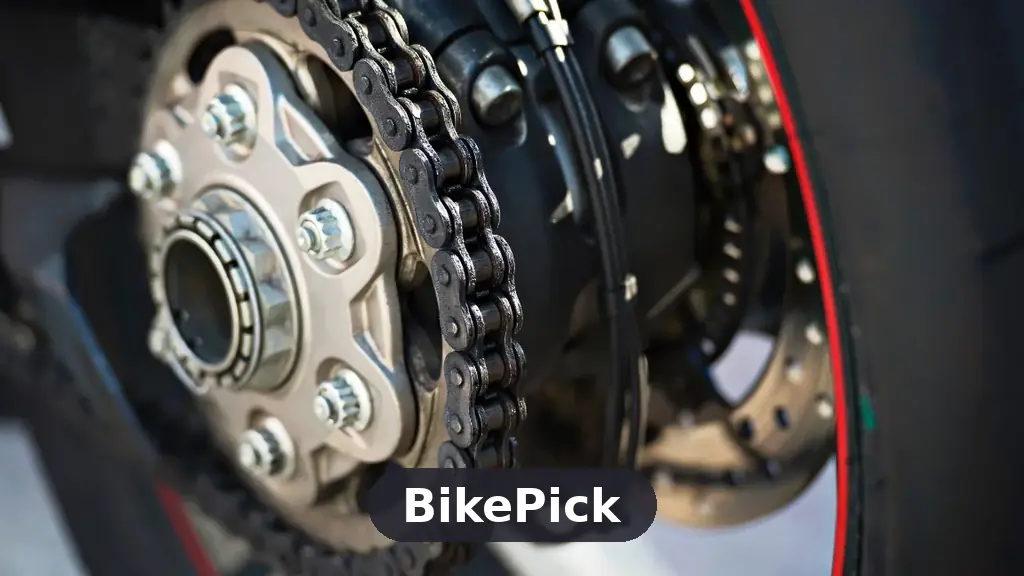
Even with good maintenance, chains wear out. Signs that a chain needs replacing include tight spots that do not go away after adjustment, links that feel stiff or kinked, visible rust that does not clean off, and a chain that has reached its maximum adjustment. If you pull the chain away from the rear sprocket and can see daylight between the chain and the sprocket, the chain is worn.
As a rough guide, a well maintained chain can last 20,000 to 30,000 kilometres, but this varies hugely with riding style, conditions, and maintenance. Chains that are never cleaned or lubricated can wear out in a fraction of that distance. Replace the sprockets at the same time as the chain, so the new chain is not worn down by old, hooked sprocket teeth.
Chain replacement is a job you can learn, but it needs the right tools, including a chain breaker and riveter. If you are not confident, have a workshop do it. A badly fitted chain is a safety risk, and this is one job where getting it wrong has serious consequences.
Your Chain Maintenance Checklist
Clean and lubricate every 500 to 800 kilometres, or after any wet or dirty ride. Check the tension every time you lubricate. Use motorcycle chain cleaner and chain lubricant, not general-purpose products. Always turn the wheel by hand, never with the engine running. Apply lubricant to the inside of the chain and let it set before riding. Adjust tension in small steps, keeping both sides even. Inspect the sprockets for hooked or worn teeth. Replace the chain and sprockets together when the chain is worn out.
Chain maintenance is a small investment of time that pays for itself many times over. A clean, well adjusted chain makes your bike smoother, quieter, and cheaper to run. Make it part of your regular routine, and it will become a quick habit rather than a chore. For the rest of your regular upkeep, read our guide to new owner maintenance basics and our guide to motorcycle tyre checks.
Look after your chain and it will look after you. It is one of the cheapest parts to maintain and one of the most expensive to ignore.
How often should I clean and lube my motorcycle chain?
Clean and lubricate your chain every 500 to 800 kilometres, or more often if you ride in rain or dust. Always re-lubricate after a wet ride or after washing your bike, because water strips lubricant from the chain. Check the tension at the same time.
Can I use regular oil on my motorcycle chain?
No, use a lubricant made for motorcycle chains. General-purpose oil and spray lubricant do not stick well at speed and do not penetrate the links properly. Motorcycle chain lube is designed to stay on the chain and protect the seals inside the links.
How do I know if my chain is too tight or too loose?
Check the slack at the midpoint between the sprockets. Push the chain up and down and measure the total movement, then compare it with the range in your owners manual. Too tight puts strain on the gearbox and bearings, while too loose can jump off the sprocket.
When should I replace my motorcycle chain?
Replace the chain when it has tight spots that will not adjust out, links that feel stiff or kinked, or visible wear that does not clean off. If you can pull the chain away from the rear sprocket and see daylight, it is worn. Always replace the sprockets at the same time.