Common Used Motorcycle Red Flags That Should Make You Walk Away
Most used motorcycles on the market are honest bikes sold by honest people. A small number are not. Some have serious mechanical problems, some have paperwork trouble, and some are being sold by people who know exactly what is wrong and hope you will not notice. Learning to spot the warning signs early saves you money, time, and a lot of frustration.
A red flag does not always mean you must walk away immediately. Sometimes it is a single issue with a fair explanation and a price that reflects it. But several red flags together, or one serious flag with no explanation, should end the deal. This guide covers the warning signs in the listing, the seller, the paperwork, the bike, and the test ride.
Red Flags in the Listing
The listing is your first filter, and it can tell you a lot before you leave home. Be wary of adverts with almost no information, very few photos, or photos that are blurry, taken at night, or cropped so you cannot see the whole bike. A genuine seller who is proud of their bike usually shows it clearly from several angles.
Watch for stock photos instead of real photos of the actual bike, and for listings that refuse to show the odometer or the identification number area. Also be careful with vague descriptions such as runs great or just needs a small fix. Those phrases are often used to hide a real problem. Ask for more photos and a clear description before you travel. If the seller will not provide them, move on.
Price is another useful signal. A bike listed far below the going rate for similar bikes is rarely a lucky find. It usually means the seller wants a quick sale because something is wrong, or the bike has a legal problem. Compare the price with several similar listings first. If the deal looks too good to be true, it almost always is.
Red Flags From the Seller
How the seller behaves matters as much as the bike. Be cautious if the seller pressures you to decide quickly, refuses to answer simple questions about ownership or service history, or keeps changing the story about why they are selling. A genuine owner can explain their bike’s history without hesitation.
Be very careful if the seller asks for a deposit before you have seen the bike, or asks you to pay through an unusual method with no buyer protection. Never pay for a bike you have not inspected in person. Also be wary if the seller insists on meeting in an isolated place or at night, or will not let you bring a friend or a mechanic. Those are not the actions of someone with nothing to hide.
Another warning sign is a seller who will not let you test ride the bike, or who will not let you start it cold. Both are basic parts of buying a used motorcycle, and a refusal usually means the seller knows something will show up. Our guide on how to buy a motorcycle from a private seller safely explains how to handle the meeting and the payment safely.
Red Flags in the Paperwork
Paperwork problems are some of the most serious red flags because they can leave you with a bike you cannot legally own or ride. Walk away if the seller cannot produce the title or ownership document, if the name on it does not match the seller, or if the frame number does not match the documents. These are not small admin errors. They can mean the bike is stolen or the seller has no right to sell it.
Also walk away from a title that shows an outstanding lien or finance holder with no proof that it has been cleared. If a lender still has a claim on the bike, your purchase may not be safe. A history check that reports theft, a write off, or a mileage record that goes backwards is equally serious. Run the check yourself before you pay, and treat a bad result as a deal breaker unless you fully understand it and accept the risk.
Missing service history on its own is not a red flag, but a bike with no records, no keys beyond one, and no paperwork at all is a pattern of neglect. One missing item is normal. All of them together suggest the bike has not been cared for, or the seller is not the real owner. See our motorcycle paperwork checklist for every document to verify.
Red Flags on the Bike Itself
Start the bike cold and watch closely. Blue smoke from the exhaust, white smoke that does not clear, rough running, or a bike that will not idle steadily can all point to engine trouble. A seller who has warmed the engine before you arrive may be hiding a cold start problem, so always ask to see a cold start.
Look for signs of crash damage. Mismatched paint, new paint on one side only, bent levers, scraped engine covers, and uneven panel gaps can all point to a fall. Minor drops happen, and a seller who is honest about them is fine. A seller who claims the bike has never been dropped while the evidence says otherwise is not honest, and you should wonder what else they are hiding.
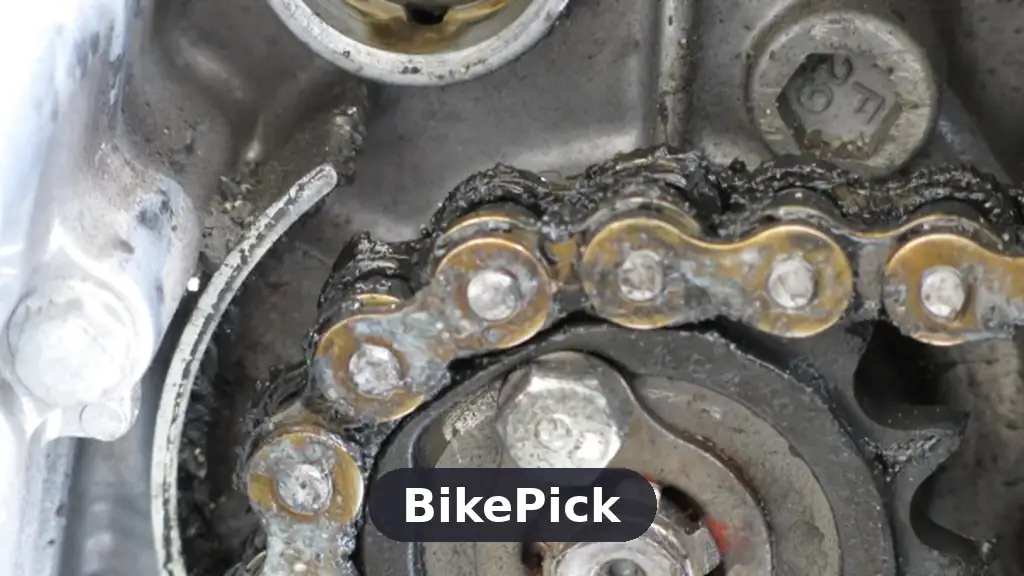
Check the frame carefully for cracks, bends, or welds that do not look factory made. Frame damage is expensive and can be dangerous, and it is one of the few problems that should make you walk away immediately. Also check the forks for leaks, the chain and sprockets for wear, the tyres for cracks and age, and the brakes for worn pads and scored discs. Any one of these can be fixed, but several worn items together suggest the bike has been neglected, and the repair bill will add up fast.
Red Flags on the Test Ride
The test ride is where hidden problems show themselves. Walk away if the clutch slips under acceleration, the gearbox jumps out of gear, or the bike is hard to get into gear. These are expensive repairs. The same applies if the brakes pull to one side, feel spongy, or make a grinding noise, or if the steering feels notchy, loose, or pulls to one side.
Listen for knocking, rattling, or whining noises that change with speed or load. Feel for vibrations that seem wrong for the bike, and watch for warning lights that stay on. A bike that overheats on a short ride, or loses power under load, has a problem that a quick fix will not solve.
When to Walk Away, and When to Negotiate
Walk away immediately from a stolen bike, altered numbers, outstanding finance with no clearance, frame damage, or a seller who pressures you or hides the bike’s history. These problems are not worth any discount. Walk away also when several smaller red flags add up to a bike that has clearly been neglected, even if no single fault is fatal on its own.
Negotiate when the issue is clear, fixable, and priced fairly. Worn tyres, a tired chain, an overdue service, or a cracked indicator are normal wear items. If the seller is honest about them and the price reflects the cost of fixing them, the bike can still be a good buy. Use the repair costs to support your offer, and get a mechanic’s view if you are unsure how much the work will cost.
The hardest part of buying used is walking away from a bike you already like. It helps to decide your limits before you go, and to bring a friend who has no emotional attachment to the bike. A second opinion from someone calm is often the difference between a good buy and an expensive lesson. There will always be another bike. There is no reason to buy the wrong one today.
What is the biggest red flag when buying a used motorcycle
A frame number that does not match the title, or a title that does not belong to the seller, is the biggest red flag. It can mean the bike is stolen or cannot be transferred to you, and no discount makes that safe.
Should I buy a bike that has been dropped
A bike with an honest history of a low speed drop can be fine if the damage is cosmetic and the frame and forks are straight. Walk away if the seller hides the damage or if the frame, forks, or wheels are bent.
Is smoke from the exhaust always a serious problem
Not always, but it should be investigated. Blue smoke can point to oil burning, white smoke that does not clear can point to coolant trouble, and heavy black smoke can point to fuelling issues. Get a mechanic opinion before you buy.