Motorcycle Paperwork Checklist Title Registration and History Checks
A motorcycle can look perfect and still be a terrible purchase if the paperwork is wrong. A missing title, a mismatched frame number, an unpaid loan, or a theft record can turn a good deal into a bike you cannot register, cannot insure, and cannot legally sell. The mechanical inspection gets most of the attention when buying used, but the paperwork check is just as important, and it costs far less to get right.
This checklist covers every document and check you should complete before you pay for a used motorcycle. The exact names of documents and the agencies involved vary by market, so use this as a guide to what to ask for and verify, and confirm the local process where you live. The principles are the same everywhere: the seller must be able to prove they own the bike, the bike must match its papers, and there must be nothing outstanding against it.
The Title or Ownership Document
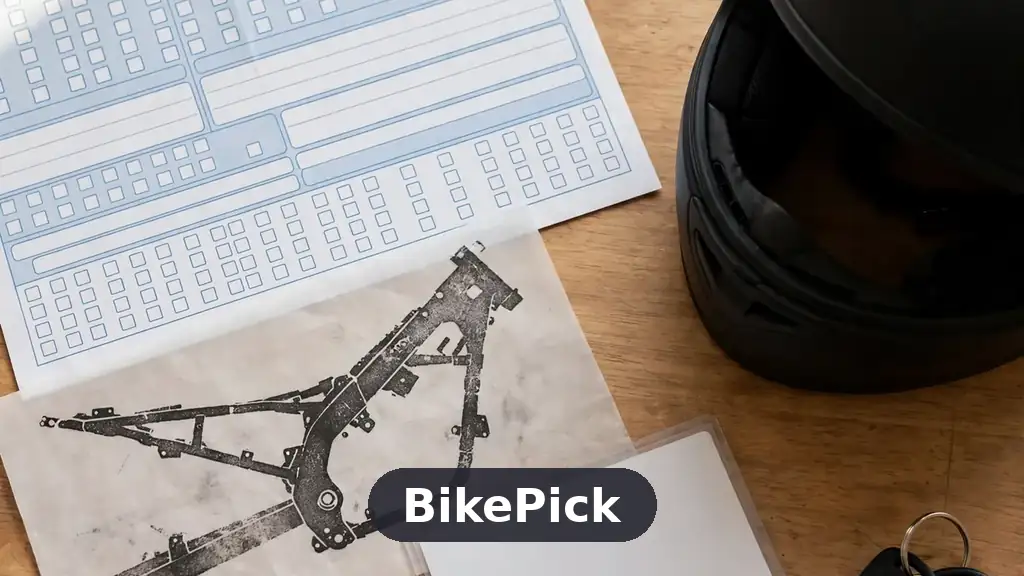
The title, or ownership certificate, is the most important document in the sale. It proves who owns the bike and is usually needed to transfer ownership to you. Ask to see the original, not a photocopy or a photo on a phone. Check that the document looks genuine, with no signs of alteration, and that the details on it match the bike in front of you.
The name on the title should match the seller’s identification. If it does not, you need a clear and provable explanation. The seller may be acting for a family member, or the bike may have passed through a dealer. Whatever the story, ask for written proof. A title signed over by someone who is not the seller, with no supporting document, is a reason to stop.
Check whether the title shows any lien or finance holder. If a lender is listed, the loan must be settled before or during the sale, and you should see proof that it has been cleared. Never accept a promise that the seller will pay off the loan later. If the loan is not cleared, the lender may still have a claim on the bike even after you have paid for it.
Registration and Identification Numbers
Registration shows that the bike is recorded with the relevant authority and is current for road use. Ask to see the current registration and check the expiry date, the registration number, and the recorded details of the bike, including make, model, year, and colour. If the registration has lapsed, find out what it will cost and what steps are needed to renew it before you agree a price.
Next, match the numbers. The vehicle identification number, usually stamped on the frame, must match the number on the title and registration exactly. Check every character, not just the first few. Also check the engine number if it is recorded on the documents. Numbers that do not match, look ground down, or appear re-stamped are serious red flags. Do not buy a bike with altered numbers under any circumstances.
History Checks: Theft, Finance and Accidents
A history check is a search of official and commercial records using the bike’s identification number. The exact service varies by market, but most regions have an official register or a reputable commercial provider that can report whether the bike has been recorded as stolen, has outstanding finance, has been written off, or has an inconsistent mileage record.
Run the check before you pay, and run it yourself rather than relying on a report the seller shows you. A report can be old, edited, or for a different bike. A fresh check costs little compared with the price of a motorcycle and gives you an independent answer. If the check returns anything unexpected, ask the seller to explain it and get the explanation in writing if you decide to proceed.
Pay particular attention to mileage. If the recorded mileage goes down over time, or jumps in a way that does not fit the bike’s condition, the odometer may have been tampered with. A bike with very low mileage but heavily worn grips, pegs, and seat is telling a different story from its odometer. Trust the physical evidence and the records together, not either one alone. For more on spotting dishonest listings, see our guide to common used motorcycle red flags.
Service History and Other Records
Service records are not legally required, but they are strong evidence that a bike has been cared for. Ask for the service book, workshop invoices, and receipts for parts such as tyres, chains, brake pads, and batteries. A complete history adds value to the bike and gives you confidence. A missing history does not prove neglect, but it should be reflected in the price.
Ask about the keys as well. A bike should normally come with two keys. If only one is available, find out why, and budget for a spare. On bikes with an immobiliser or coded key, a replacement can be expensive, so this is worth checking before you agree a price.
If the bike has modifications, ask for receipts and check whether they affect registration or insurance. Exhausts, suspension changes, and engine work can all matter. Keep the receipts with the bike’s papers, since the next buyer will ask the same questions one day.
The Transfer and the Bill of Sale
Once you have verified everything, complete the transfer promptly. The process varies by market, but it usually involves signing the title or a transfer form, submitting it to the relevant authority, and paying a fee. Do not leave the transfer for weeks. Until it is done, the bike is still registered to the seller, which can cause problems for both of you if anything happens.
Write a bill of sale and have both parties sign it. It should record the date, the sale price, the buyer and seller names, and the bike’s make, model, year, identification number, and odometer reading. Both buyer and seller should keep a signed copy. This document is your proof of the transaction and the condition of the sale.
Check whether the bike needs an inspection, roadworthiness test, or emissions test as part of the transfer. If it does, find out what is involved and what it costs before you pay. A bike that fails an inspection can need expensive work, and you should know that before the money changes hands, not after. Read our guide on how to buy a motorcycle from a private seller safely for the full buying process around this paperwork.
Paperwork Checklist at a Glance
Use this table as a quick reference when you are standing next to a bike. Every row should be a yes before you pay.
Title or ownership document: original seen, seller name matches, no lien listed. Registration: current, details match the bike. Frame number: matches the title exactly. Engine number: matches the records if recorded. History check: run fresh, clear of theft, finance, and write off records. Service history: records seen or price adjusted for their absence. Keys: two keys present, or cost of a spare known. Bill of sale: signed by both parties with full bike details and price.
If any row is a no and the seller cannot fix it on the spot, pause. Most paperwork problems have a solution, but the solution should happen before you pay, not after. A seller who is genuine will understand that and will help you complete the checks. A seller who rushes you past the paperwork is telling you something important about the deal.
Good paperwork does not guarantee a good bike, and a good bike with bad paperwork is still a bad purchase. Check both, and buy with confidence only when both are right. The few minutes you spend on documents before paying can save you months of trouble afterwards, and they are the cheapest insurance you will ever buy.
What documents should I get when buying a used motorcycle
You should get the original title or ownership document, the current registration, the service history, both keys, and a signed bill of sale. The title and registration must match the seller and the bike.
How do I check if a motorcycle has outstanding finance
Run a history check using the frame or vehicle identification number through the official register or a reputable provider in your market. Do this yourself before paying, and do not rely only on a report shown by the seller.
What if the frame number does not match the title
Do not buy the bike. A mismatched or altered frame number can mean the bike is stolen, rebuilt from parts, or recorded incorrectly, and it can prevent you from registering or insuring it.